
In Terminator 2, John Connor asks the killing machine sent to protect him if it can learn to be "more human"... and "not such a dork all the time."
Later, John teaches him some new material, like "Hasta la vista, baby." He also says the phrases can be combined. The Terminator tries one: "Chill out, dickwad."
The Terminator is still a Terminator. But by the end, he has picked up enough of John's language and mannerisms to feel less like a dork standing next to a kid.
I wanted that for Hilo... minus the killing and Skynet.

Every room has a language
Spend a week in a team chat and you start to hear it.
One room might type in lowercase fragments. Another might write careful paragraphs. One team might say "ship it." Another might say "let's cook." A room might reach for :partyparrot: instead of an ordinary thumbs-up.
These things can look tiny from the outside. Spend enough time with the team and they carry a lot. You learn what everyone means and when a joke needs no explanation.
Hilo used to miss all of it.
It entered every room wearing the same customer-support shirt. Its prompt always said, "Be concise (1-4 sentences). No emojis." Its reaction path had six basic emojis, and usually reached for only two. Useful, usually... but always the same agent.
I worried that sameness would create a small distance. People might begin translating themselves into whatever voice gets the cleanest answer from the machine. Either the agent stays an alien, never really part of the team, or worse... people slowly bend toward the way the agent communicates.
That felt backwards. A new member should learn the room and adapt.
How Hilo learns
Hilo now reads recent messages written by people in the room and builds a small picture of how the group talks. If the room is still too quiet, it leaves that picture empty rather than making one up.
It notices the things we can measure without guessing: how long messages tend to be, whether they start lowercase, whether people bother with a final period, and how often emojis show up.
Then it looks for the shared stuff: repeated phrases and the team's words for its own projects. It also notices which language people use.
This belongs to the room as a whole. Hilo is told to describe the room, not one person. Names are excluded from the learned phrases and vocabulary. A phrase has to appear in the conversation exactly as written. Most expressions also need to come from more than one person, or show up repeatedly.
We caught this in testing. The model suggested "hasta la vista" for a room that had never used those exact words.
I had already talked in that room about this exact Terminator 2 theory: John teaching Arnold how to talk. My theory is that the model caught the surrounding reference and completed it with the obvious phrase.
I loved that. It looked like the model had picked up the context of the conversation. It was just the wrong thing to save as one of the room's own phrases, so the verifier dropped it.
Too meta... haha.
The same idea applies to reactions. Hilo looks at which reactions people have actually used recently. The person speaking matters most, then the channel, then the wider workspace. Hilo's own reactions do not count, because an agent repeating itself and then calling that "team culture" would be a little too realistic.
So if a room reaches for :typingcat:, Hilo can reach for it too. It also remembers what it used last, because nobody wants to work with the guy who responds to everything with the same meme.
This learning happens in the background. Hilo should never make you wait while it studies your punctuation.
Why this matters at work
A team does more than exchange information. It builds a way of being together.
Think of the strange abbreviation everybody understands, or the phrase that means "this is ready" without needing another meeting. A lot of belonging hides in that shorthand.
When an agent speaks like the same generic assistant forever, it still feels like a visitor to me.
The goal is to remove some of that friction. People should not need to clean up their language for Hilo. Careful rooms can stay careful. Weird rooms can stay weird.
There is a line, claro. Nobody enjoys the new guy who learns one slang word and uses it in every sentence. Hilo's instructions say to use the team's phrases only when they fit, and to write plainly when they don't. The first rule of sounding less like a dork is not trying so hard.
This changes how Hilo speaks in a room. It does not give Hilo more access, coding ability, or authority. A person still decides what ships.
Style cannot become authority just because it sounds familiar... although a familiar voice might make you more willing to approve an agent's work. That is exactly why the human review gate matters.
We have been saying that hilos is where a team and its agents make the product together. I think "together" includes the small stuff. The room should still sound like the people who made it theirs.
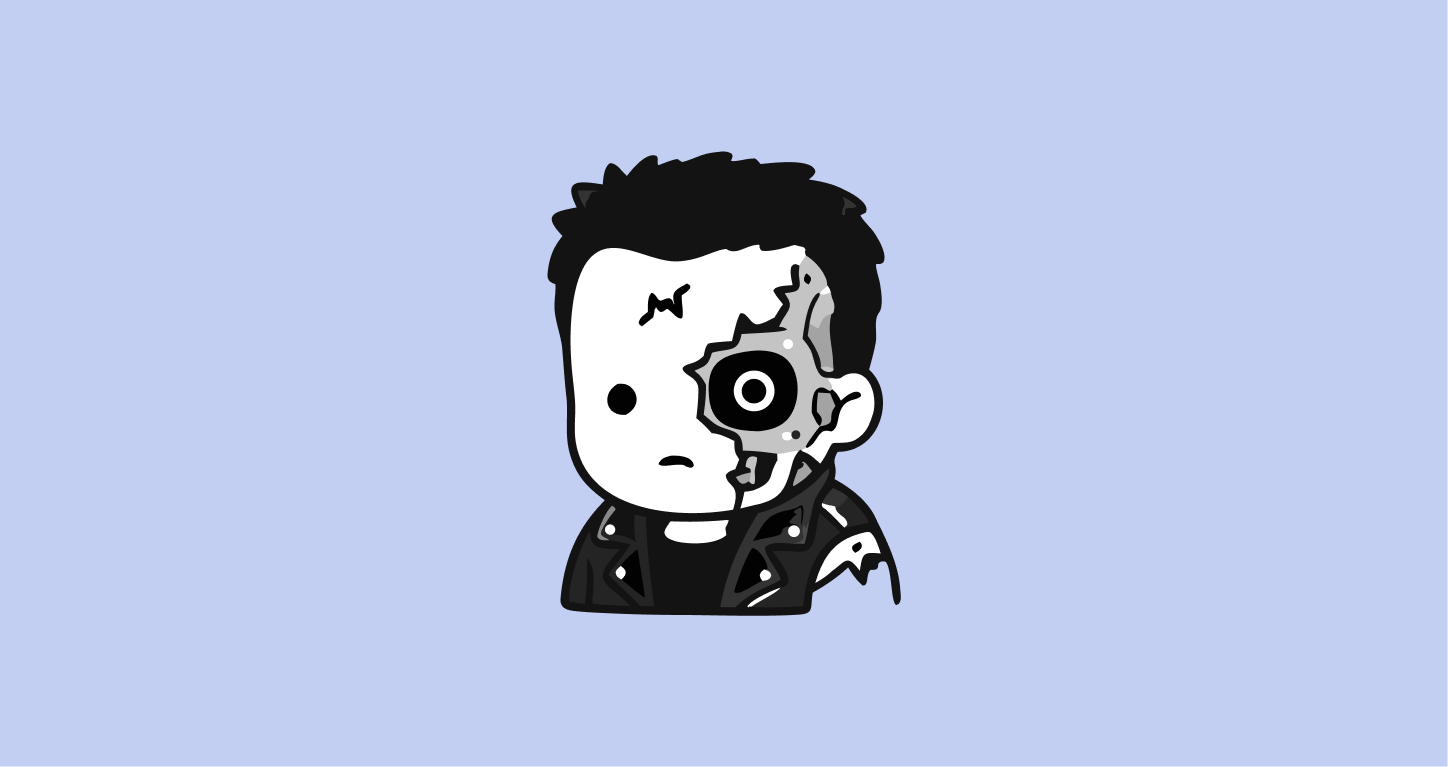
Anyway... trying to make Hilo adapt to the room... without the leather jacket, GE M134 Minigun, and definitely no Skynet.